Sauna for Women: Hormones, Menstrual Cycle and Menopause
Key Takeaways
- Sauna heat does not "balance hormones," but it can influence stress response, body temperature, sweating and nervous system recovery when practised regularly.
- Heat tolerance shifts across your cycle: the luteal phase runs warmer, so sessions may need to be shorter, cooler and better hydrated before your period.
- Menopause symptoms such as hot flushes, broken sleep and low mood may ease with short, controlled sessions, though high heat can make flushes worse for some women.
- Much foundational sauna research was carried out in mostly male groups, so female-specific evidence is still forming — tracking your own response matters more than copying generic protocols.
- Pause and seek medical advice if pregnant, breastfeeding without guidance, bleeding heavily, iron-deficient, dizzy, feverish, or managing heart or blood pressure conditions.
How Sauna Supports Women’s Health Across Hormones, Cycles and Menopause
Quick Answers: Sauna for Women
- Can I use a sauna on my period? Yes, if flow is normal and you feel well — keep it short (5–10 minutes), hydrate more, and stop if you feel faint.
- Does sauna balance hormones? No. It supports stress recovery, circulation and sleep, which sit around hormonal health rather than changing hormone levels directly.
- Best temperature to start? Low to moderate: roughly 45–55°C for infrared or 60–70°C for traditional, building up gradually.
- Sauna during pregnancy? Avoid unless your doctor approves, since raised core temperature carries fetal risk.
- Infrared or traditional? Infrared feels gentler; traditional gives stronger heat. Choose based on tolerance, space and budget.

Sauna for women refers to using heat therapy in a way that respects female physiology, including hormonal changes, menstrual cycle phases, perimenopause, menopause, hydration needs and heat tolerance.
The main benefit is not a single “hormone hack.” The benefit comes from a repeatable heat routine that may support:
- stress recovery
- circulation
- sweating
- sleep preparation
- muscle relaxation
- menstrual comfort
- skin health
- general wellbeing
Research on sauna bathing shows effects on cardiovascular, immune and nervous system function, with regular sauna use linked to improved vascular function, reduced arterial stiffness and autonomic nervous system changes. One caveat worth stating up front: much of this foundational data comes from predominantly male study populations, so the female-specific picture is still emerging. That is a reason to treat your own tracked response — not a fixed rule — as the real guide.
For women, the key is control. A safe sauna routine should match your cycle, symptoms, fitness level, hydration and health status. Longer and hotter is not better. Consistency matters more than intensity.
If you are comparing sauna types first, read Types of Saunas Explained: Which One Is Best for You?.
How Does Sauna Use Affect Women’s Hormones?
Sauna use and women’s hormonal health is a popular topic, but the answer needs to be clear: sauna does not replace medical care, hormone therapy or cycle management. It may influence systems connected to hormones, especially stress response, body temperature and recovery.
Estrogen and Progesterone: Why Heat Tolerance Can Change
Estrogen and progesterone shift across the menstrual cycle. These hormones can affect core temperature and heat tolerance.
During the luteal phase, which happens after ovulation and before your period, progesterone is higher. Research on menstrual cycle thermoregulation shows women may have a higher internal temperature during this phase compared with the follicular phase.
What this means in practice:
- sauna may feel harder before your period
- sweating may start sooner
- fatigue may rise faster
- hydration becomes more important
- shorter sessions may feel better
This is why sauna benefits for women’s health should be personalised. Your best sauna timing may change week to week.
Cortisol and Stress Recovery
Cortisol is one of the body’s main stress hormones. Sauna heat is a controlled stressor. During a session, heart rate and body temperature rise. After the session, the body cools down and shifts into recovery.
A review on sauna endocrine effects notes that sauna bathing can affect the hormonal and autonomic nervous systems, with hormone responses that are usually short-lived and normalise during recovery.
For women dealing with work stress, poor sleep, training fatigue or midlife hormonal changes, sauna may be useful as part of a wider recovery routine. It should be paired with hydration, sleep, nutrition and medical support when symptoms are severe.
Why Some Women Prefer Infrared Sauna
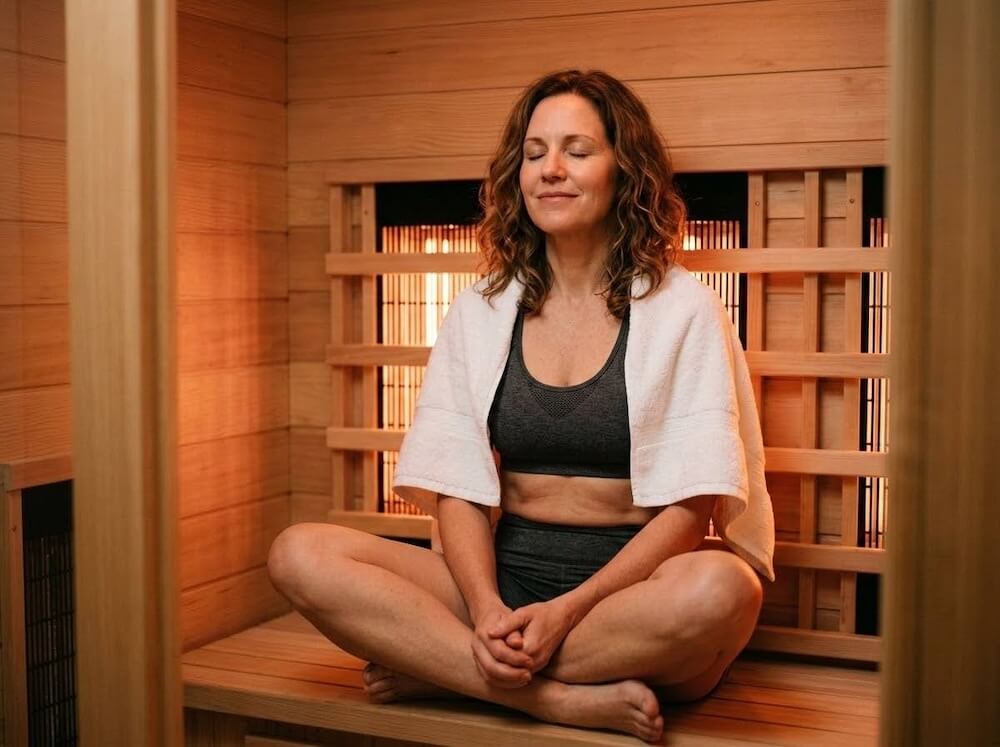
Infrared sauna use for women is often searched by users who want a gentler heat option. Infrared saunas use radiant heat to warm the body directly while keeping the surrounding air cooler than many traditional saunas.
This can make infrared sauna a practical option for women who prefer lower ambient heat, especially beginners, busy professionals and those building a home wellness routine.
Infrared units at Warrior Plunge run at gentler temperatures than traditional steam, which suits a first sauna routine; see the infrared vs traditional sauna comparison to weigh heat type, session length and cost.
If you want to understand the difference between heat types, compare your options in Types of Saunas Explained: Which One Is Best for You?.
Can You Use a Sauna During Your Menstrual Cycle?
Yes, many women can use a sauna during their menstrual cycle, but session timing and intensity should change based on how you feel.
Using a sauna across menstrual cycle phases should be guided by symptoms, not rigid rules.
Best Sauna Timing by Cycle Phase
-
Menstrual phase: Day 1–5
Use only if you feel stable. Keep sessions short. Avoid sauna if you have heavy flow, dizziness, nausea, migraine or severe fatigue. -
Follicular phase: After period to ovulation
This is often the easiest time for sauna use. Energy and heat tolerance may feel better. Standard sessions may be suitable. -
Ovulation phase: Mid-cycle
Most women can continue regular sauna sessions. Monitor hydration, especially if training hard. -
Luteal phase: After ovulation to period
This phase may feel warmer due to higher progesterone. Reduce session duration or temperature if sauna feels more intense than usual.
Can Sauna Help Period Pain?
Sauna may help some women feel temporary relief from cramps because heat can relax muscles, improve comfort and reduce pain perception. Evidence on heat therapy for primary dysmenorrhea supports local heat as a complementary option for menstrual pain relief.
A note for women with heavy or painful periods: heavy monthly bleeding is a common cause of iron deficiency, and low iron makes sauna-related dizziness more likely. If your periods are heavy, keep sessions short, hydrate well, and check your iron levels with your GP before building up heat exposure.
Sauna is whole-body heat, not the same as a heating pad on the lower abdomen. Still, the relaxation effect may help some women.
A simple period sauna protocol:
- 5–10 minutes only
- low to moderate heat
- sit near the lower bench if available
- hydrate before and after
- stop if bleeding feels heavier or you feel lightheaded
- avoid cold plunge immediately after if cramps worsen with cold
For session duration guidance, read How Long Should You Stay in a Sauna? Complete Duration Guide.
Can Sauna Help Menopause Symptoms?
How sauna may support menopause symptoms is a growing search topic because many women want non-drug support for hot flashes, poor sleep, mood changes and muscle aches.
Menopause is a normal life stage. It is diagnosed after 12 months without a period, and the years before it are called the menopausal transition or perimenopause. Common symptoms may include hot flashes, sleep disruption, mood changes, headaches and abnormal bleeding.
Sauna cannot cure menopause. It may support symptom management in three practical ways.
A fourth point is worth naming honestly: sauna heat supports circulation and relaxation, but it does not protect bone density, which falls after menopause. Treat sauna as a recovery and comfort tool alongside — not instead of — resistance training, adequate protein and any bone care your doctor recommends.
-
Hot Flashes and Heat Adaptation
Hot flashes are linked to changes in the body’s temperature regulation. This makes sauna a careful tool, not a universal solution.
Some women may find regular controlled heat exposure helps them tolerate temperature changes better. Others may feel worse if sessions are too hot, too long or too close to bedtime.
Start low:
- 5–8 minutes
- 2 sessions per week
- lower temperature
- longer cool-down
- no aggressive contrast therapy at first
Track hot flashes for two weeks. If frequency, intensity or night sweats increase, reduce or pause sauna.
-
Sleep and Evening Routine
Menopause can disrupt sleep through night sweats, mood changes and temperature shifts. Mayo Clinic notes that menopause symptoms may disrupt sleep, lower energy and affect mood.
A short evening sauna may help some women build a stronger wind-down routine. The goal is to finish early enough for the body to cool before bed.
Try:
- sauna 1–2 hours before sleep
- 8–12 minutes
- warm shower after
- light hydration
- cool bedroom
Avoid late, intense sessions if they leave you hot or wired.
-
Mood, Stress and Recovery
Midlife hormonal changes often overlap with work stress, training fatigue, poor sleep and family demands. Sauna gives the body a clear recovery signal: heat, sweat, cool-down, rest.
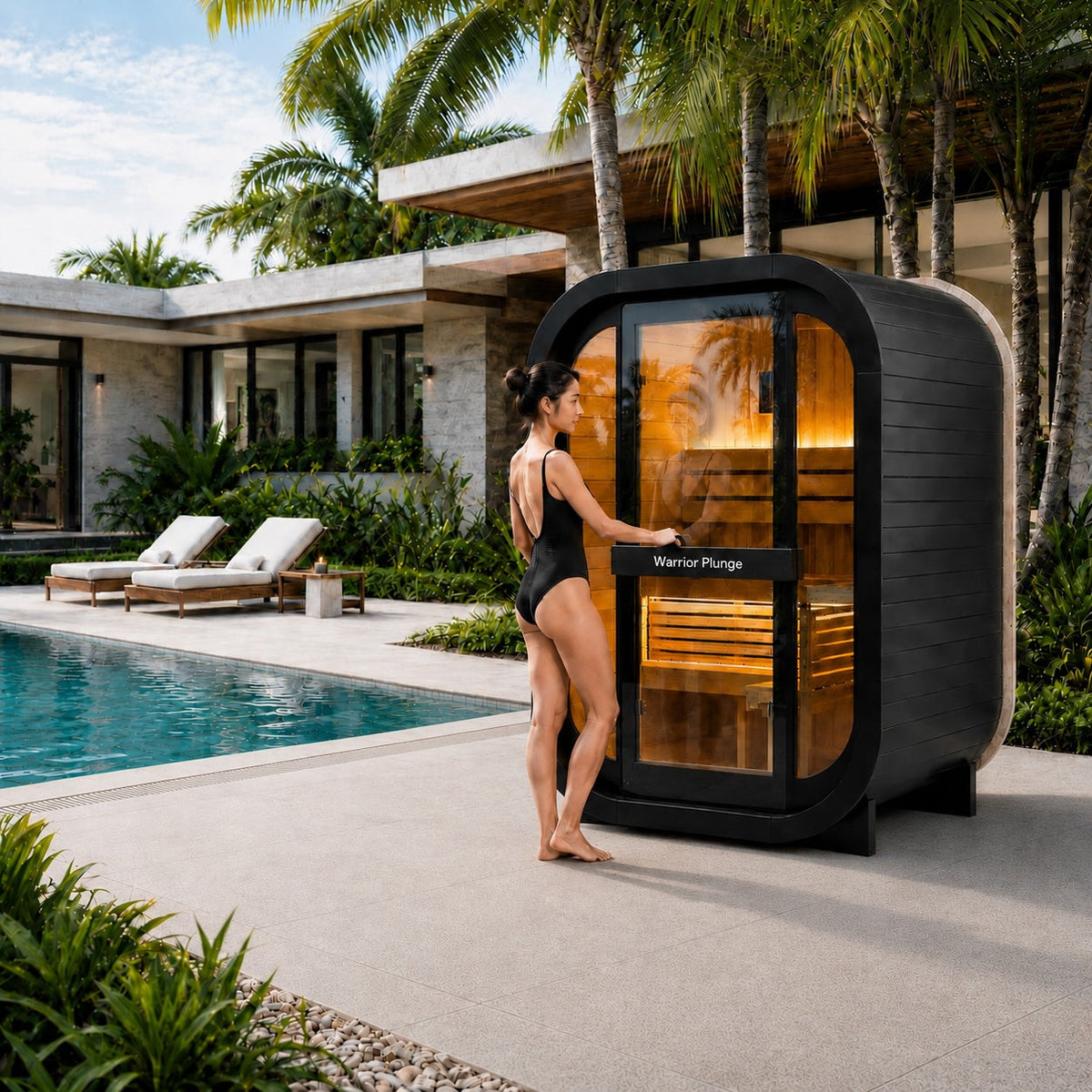
This is where Warrior Plunge saunas help women manage build a repeatable recovery routine at home. The product is not women-specific, but the routine can be adjusted for cycle tracking, menopause symptoms, skin care and recovery goals in the comfort of your home.
Pairing heat with cold is where the effect deepens: alternating sauna and cold immersion drives circulation harder than either alone. Read the contrast therapy guide for protocols, and the ice bath benefits research if you want the cold side first.
Explore the Warrior Plunge sauna collection to compare portable steam, infrared, traditional and custom sauna options.
What Are the Skin Benefits of Sauna for Women?
Sauna benefits for women’s skin health are closely linked to sweating, circulation and post-session hygiene.
During sauna use, heat increases blood flow and activates sweat glands. These responses may support healthier-looking skin by improving circulation and sweat activity. Sauna does not replace cleansing, sunscreen, acne treatment or dermatology care.
For women dealing with dull skin, clogged pores, acne-prone skin or aging concerns, sauna may support a wider skin routine.
Best skin protocol:
- remove makeup before sauna
- hydrate before the session
- keep sessions moderate
- rinse sweat after
- use a gentle cleanser
- moisturise after cooling down
- avoid sauna during active skin inflammation if heat worsens redness
For deeper guidance, read Sauna Benefits for Skin: Glow, Acne & Anti-Aging.
When Should Women Avoid or Modify Sauna Use?
Women should pause or modify sauna use when heat may create unnecessary risk.
Avoid sauna or speak to a healthcare provider first if you are:
- pregnant or trying to confirm pregnancy
- breastfeeding, unless you can hydrate well and your provider is happy for you to
- trying to conceive, since raised core temperature is worth discussing with your doctor first
- living with a condition such as PCOS, endometriosis, fibroids or a thyroid disorder, where heat tolerance and symptoms vary — confirm suitability with your provider
- experiencing heavy menstrual bleeding or known iron deficiency
- dizzy, dehydrated or feverish
- recovering from illness
- taking medication that affects blood pressure, sweating or hydration
- dealing with uncontrolled high blood pressure
- managing heart disease
- prone to fainting
- experiencing severe menopause symptoms
- using alcohol before the session
Is Sauna Safe During Pregnancy?
Sauna safety during pregnancy needs a clear answer. American College of Obstetricians and Gynecologists advises against sauna and hot tub use in early pregnancy because raising core body temperature may be harmful to the fetus, especially with long exposure.
If pregnant, avoid sauna unless your doctor gives specific guidance. Do not use sauna to manage pregnancy aches without medical approval.
Warning Signs to Stop Immediately
Stop your sauna session if you feel:
- dizzy
- faint
- nauseous
- confused
- short of breath
- chest discomfort
- racing heartbeat that feels abnormal
- chills or weakness
- headache
- sudden worsening cramps
- unusual bleeding
A good sauna routine should leave you calm and recovered, not drained.
Simple Sauna Protocol for Women

Start with a routine you can repeat safely.
Beginner Protocol: Weeks 1–2
Use this if you are new to sauna, returning after a break or entering perimenopause.
- Frequency: 2 times per week
- Duration: 5–10 minutes
- Heat: low to moderate (around 45–55°C infrared, or 60–70°C traditional)
- Cool-down: 10 minutes
- Hydration: water before and after
- Goal: learn your heat tolerance
Build-Up Protocol: Weeks 3–6
If you feel good after the first two weeks:
- Frequency: 3 times per week
- Duration: 10–15 minutes
- Heat: moderate (around 55–60°C infrared, or 70–80°C traditional)
- Cool-down: 10–15 minutes
- Add light stretching after
- Track sleep, mood, cramps and hot flashes
Maintenance Protocol: Long Term
Once your routine is stable:
- Frequency: 3–5 times per week
- Duration: 15–20 minutes
- Heat: to comfortable tolerance (up to ~60°C infrared, or 80–90°C traditional)
- Adjust before period or during hot flashes
- Take rest days when tired
- Keep hydration consistent
A practical range for most sauna users is often 15–20 minutes once tolerance is built, but beginners should start shorter and increase gradually.
If you are planning a home setup, read How Much Does Home Sauna Cost in Malaysia? Complete Price Guide before choosing between portable, infrared, traditional or custom options.
How to Track Your Sauna Routine Around Hormones
Tracking helps you avoid guessing.
Use a simple note on your phone and record:
- cycle day
- sauna duration
- heat level
- energy before session
- mood after session
- cramps
- hot flashes
- sleep quality
- skin response
- hydration
- dizziness or headaches
After four weeks, look for patterns.
Many women notice sauna feels easiest in the days after their period, while luteal-phase sessions work better when kept shorter. Evening use often improves sleep, but only when the session finishes early enough for the body to cool before bed.
Hot flushes may settle with mild heat yet flare when sessions run too hot, and skin usually looks clearer on the days you rinse the sweat off and moisturise afterwards.
That feedback loop is what makes sauna genuinely useful for women — steady, repeatable adjustment rather than pushing for extreme heat.

Final Takeaway
Sauna for women works best when it is controlled, consistent and adjusted to your body. Hormones, menstrual cycle changes and menopause symptoms can all affect heat tolerance. The goal is not to push harder. The goal is to build a heat therapy routine that supports recovery, sleep, circulation, skin health and long-term wellbeing.
Warrior Plunge saunas help women create that routine at home with practical sauna options for different spaces, budgets and recovery goals.
Explore Warrior Plunge sauna collection or talk to a recovery specialist to build a setup that fits your lifestyle.
FAQs About Sauna for Women
Is sauna safe during my period?
Yes, sauna can be safe during your period if your flow is normal and you feel well. Keep sessions short, hydrate more, and stop if you feel dizzy, weak or unusually uncomfortable. Avoid sauna during heavy bleeding, severe cramps, migraine or fatigue.
Does sauna help menstrual cramps?
Sauna may help some women feel temporary cramp relief through whole-body heat, muscle relaxation and improved comfort. It is not the same as direct heat on the lower abdomen, so use it gently and stop if cramps, bleeding or lightheadedness worsen.
Can I use sauna during pregnancy?
Avoid sauna during pregnancy unless your healthcare provider gives specific approval. Raised core temperature may carry fetal risk, especially in early pregnancy or with long exposure. Do not use sauna to manage pregnancy aches without medical guidance.
Can sauna help menopause symptoms?
Sauna may support menopause routines by helping with relaxation, sleep preparation, circulation and stress recovery. However, high heat can make hot flushes worse for some women. Start with 5–8 minutes, track symptoms for two weeks, and reduce or pause if night sweats or flushes increase.
Is infrared sauna better for women than traditional sauna?
Infrared sauna may feel gentler because it uses radiant heat while the air temperature stays lower than many traditional saunas. Traditional sauna gives a stronger heat experience. The better option depends on your heat tolerance, space, budget and preferred routine.
Which Warrior Plunge sauna is best for women starting at home?
For beginners, the Warrior Portable Steam Sauna is a lower-entry option for simple home use. Women who want a dry heat experience can compare Warrior infrared and traditional sauna options in the full sauna collection. Explore the Warrior Plunge sauna collection or speak with a recovery specialist to choose the right setup.